Independent educational consultancy

Is it the language, the time he has had, or something else?

Guidance for families raising children across languages and school systems — and for the schools that teach them.

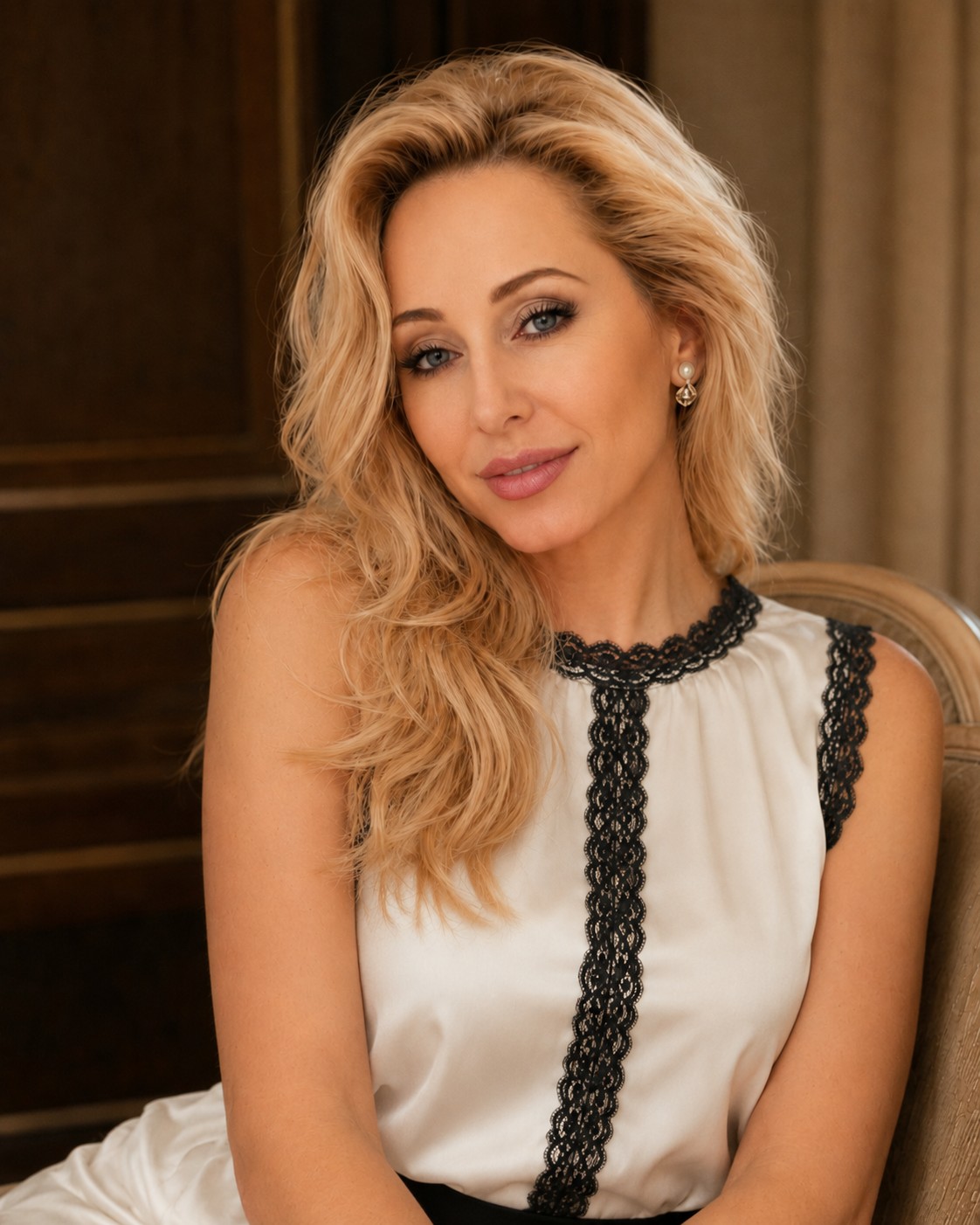
Dr Albena Ignatova

One

Difference

Typical development across two languages. The child knows more than any single test can show.

Two

Exposure

Not enough time in the language of the school. The gap closes with the right teaching, at the right pace.

Three

Disorder

A difficulty that would be present in every language the child speaks, including the one spoken at home.

Three different explanations can lead to the same outcome: the child's potential goes unrecognised.

The problem

A school sees one language. Your child has two.

A bilingual child's knowledge is distributed. Some of it sits in one language, some in the other, and only part of it in both. Measured in a single language, that knowledge is understated — even when the language measured is the stronger one.

This produces two errors, and they are mirror images of each other. Ordinary bilingual development is read as a disorder. Or a real disorder is explained away as bilingualism, and years pass.

Both errors end in the same place: the child's actual language profile is never examined.

There is a way through. A difficulty that originates in language is present in every language the child speaks — including the one used at home. Difference and limited exposure affect only the newer language. The home language is not a detail. It is the evidence.

Most schools cannot look there. They do not speak it, and they have no framework for what they would find.

Consultancy for families

Five ways I work with families.

Consultations are held online, in English, German or Bulgarian. The first conversation is for orientation: we set out the case and judge whether it falls within the area where I can be most useful.

Bilingual Profile Consultation

We map the whole language repertoire: what your child hears, uses and understands in each language, at what age it began and how much of it there has been. You receive a written summary you can hand to the school.

90 minutes · Written summary

Second Opinion

I read the school's reports and assessments alongside your child's language history, and tell you what they can and cannot establish — and what a further assessment would need to look at to be worth doing.

Document review · Written opinion

School Liaison

I attend the meeting with you, as an independent specialist. Families are rarely heard when they arrive alone, and rarely taken seriously when they arrive angry. This is the part most parents cannot do for themselves.

Meeting attendance · Follow-up note

Family Language Plan

A plan for keeping the home language while the school language grows. The two are not in competition — the first is the foundation of the second, and losing it costs more than most families are told.

Written plan · Review at six months

Continuing Guidance

For families in the middle of a relocation, a school change or a long disagreement with a school. A standing arrangement, so that you are not starting the explanation again each time something happens.

By arrangement · Limited availability

Scope

What I do not offer.

I do not make a diagnosis. The purpose of the assessment is to establish what most probably lies behind the difficulty, and on what evidence that conclusion rests.

Assessment for examination access arrangements. These are regulated and must be carried out by an assessor qualified in your jurisdiction.

I do not provide therapy in a country where practising requires local registration or a licence. In those cases I can still consult, review and advise within what is professionally permitted.

I cannot promise a particular outcome from an admissions process, an assessment or a school decision. I can help the case be put clearly, with reasoning and with the right documentation.

If it becomes clear at the first conversation that the case needs a different specialist or a different expertise, I will say so openly and point you to a suitable colleague.

Working on a developmental load profile

Method

Observation gathered over weeks and across situations, not from a single short meeting.

In a calm, structured setting a child may show one set of abilities, and behave quite differently in a classroom. That difference should not be set aside. It is often what reveals where the difficulty actually lies.

I work with a model that looks not only at the child's difficulty but at what the setting asks of the child. When the demand exceeds the resource available, the consequences can appear well beyond language — in attention, in regulation, and in how far the child takes part.

Which is why the cause of a difficulty is so often looked for where it shows most clearly, rather than where it begins.

Academy Vidimo

Training for international schools.

Delivered on site, to the whole staff or to the learning support team. In English, German or Bulgarian.

Reading the multilingual profile

Why a single-language measure understates what the child knows, and how to gather the rest of it. For class teachers and heads of year.

One day

The language of the task

An audit of the demand a task makes before any child attempts it: instruction, sentence structure, academic vocabulary, unstated steps. Staff bring their own materials and leave with them rewritten.

Half day · Workshop

Difference, exposure, or disorder

The referral decision itself. When to wait, when to act, and what evidence makes the difference. For learning support and SEN teams.

Two days · Certificate

In Bulgaria, Academy Vidimo also runs programmes accredited for teachers' qualification credits under the Ministry of Education's register. Details in Bulgarian on request.

Writing

Books.

Monograph · 2026

Language-Mediated Developmental Load in School-Age Children

A theoretical model and its operationalization

AvailableThe model, the instrument, and the first empirical trial. For researchers and clinicians.

Monograph · 2026

The Invisible Potential

The hidden cost of late educational support

Available in BulgarianTwenty chapters on the children a system sees but does not recognise. English edition in preparation.

Forthcoming

The Child Who Is Present but Does Not Take Part

For parents and teachers

In preparationTen children, ten mechanisms, and the question that would have changed each of them.

Forthcoming

Two Languages, One Child

For families raising children across languages

In preparationWhat bilingual development actually looks like, and how to tell it apart from a difficulty.

Dr Albena Ignatova

About

I work at the point where two systems meet over one child.

University lecturer, trainer, speaker, therapist and author. My work connects academic knowledge with the reality of the child, the family and the school. That is where the mismatch shows most often: a child whose difficulty began in language, a school describing behaviour, and a family told two incompatible things by people who both meant well.

My research asks why that mismatch arises, and where the point lies at which timely support can still change the course of a child's development.

  • DoctoratePhD in Psychology
  • PracticeCommunication Clinique — teletherapy and consultancy for multilingual children
  • TeachingBulgarian universities; postgraduate programmes in speech and language therapy and special education
  • ResearchThe Developmental Load Model and the DLQ-25 profiling instrument
  • LanguagesBulgarian, English, German

Booking

Choose a time.

Pick an open slot in the calendar. You will receive confirmation and a video link straight away.

  • The first conversation helps us set out the case and judge whether it falls within my expertise.
  • If you have assessments, teacher observations or written opinions, it helps to share them. None of it is required in advance.
  • The conversation and everything you share remain confidential. Information reaches a school only with your prior consent.

Schools enquiring about training may use the same calendar, or the form below.

Enquiries

Or write instead.

You do not have to start by booking a time. You are welcome to write first and describe briefly what concerns you, what the school has said, and what you still want to clarify.

Every enquiry receives a personal reply, usually within two working days.

Schools enquiring about training are welcome here too.

What you share remains confidential and is not passed to a school without your prior consent.